
 PIPAVO Team
Learn what forex is, how the currency market works, what moves exchange rates, and the key risks beginners should understand.
In this article
Introduction
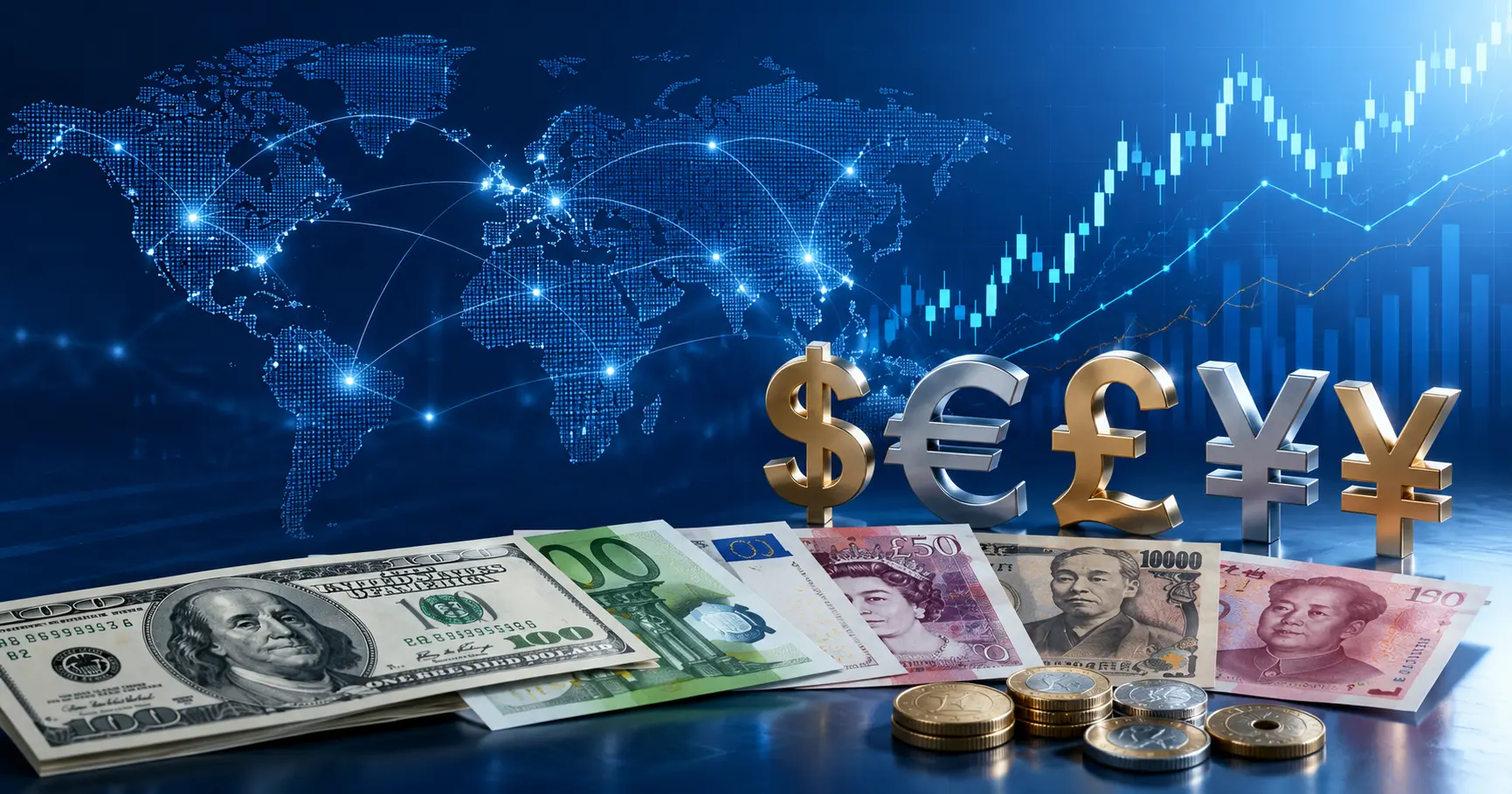
Forex is the global market where currencies are exchanged. It affects international trade, travel, investing, and the prices people pay for imported goods. For beginners, forex can seem complex because currencies trade in pairs and prices move constantly. This guide explains what forex is, how the market works, what moves exchange rates, and the main risks to understand before considering currency trading.
What Is Forex?
Forex, short for foreign exchange, is the process of converting one currency into another. The forex market is where this exchange happens.
For example, when a traveler converts Thai baht into U.S. dollars, or when a company exchanges euros for Japanese yen to pay an overseas supplier, they are participating in the foreign exchange market.
In trading, forex usually means buying one currency while selling another. Traders aim to benefit from changes in exchange rates, but those changes can move against them as well. Forex trading involves risk and is not suitable for everyone.
The forex market is commonly described as the world’s largest financial market. If using a specific size figure, cite the Bank for International Settlements Triennial Central Bank Survey.

How the Forex Market Works
Unlike a stock exchange, the forex market does not operate from one central physical location. It is largely an over-the-counter market, meaning transactions happen electronically between banks, brokers, institutions, businesses, and traders.
Forex trading runs across major financial centers around the world, including London, New York, Tokyo, Singapore, Hong Kong, Sydney, and Frankfurt. Because these sessions overlap, the market is active for much of the global business week.
Who Participates in the Forex Market?
The forex market includes several types of participants:
- Central banks, which may influence currency values through interest rates, reserves, and policy decisions.
- Commercial banks and financial institutions, which handle large currency transactions for clients and their own operations.
- Companies, which exchange currencies for international trade and business activity.
- Investment funds, which may use currencies for hedging, speculation, or portfolio management.
- Retail traders, who access the market through online brokers.
Each participant has different goals. A business may exchange currencies to pay suppliers, while a trader may speculate on whether one currency will rise or fall against another.

What Are Currency Pairs?
Forex prices are quoted in currency pairs. A currency pair shows the value of one currency relative to another.
For example:
EUR/USD = 1.0800
This means one euro is worth 1.0800 U.S. dollars.
In every currency pair, there are two parts:
- The base currency is the first currency in the pair.
- The quote currency is the second currency in the pair.
In EUR/USD, EUR is the base currency and USD is the quote currency. If EUR/USD rises, the euro has strengthened against the U.S. dollar. If EUR/USD falls, the euro has weakened against the U.S. dollar.
Major, Minor, and Exotic Pairs
Forex pairs are often grouped into three categories.
- Major pairs include the U.S. dollar and are among the most actively traded pairs. Examples include EUR/USD, GBP/USD, USD/JPY, and USD/CHF.
- Minor pairs, also called cross-currency pairs, do not include the U.S. dollar but involve major global currencies. Examples include EUR/GBP, EUR/JPY, and GBP/JPY.
- Exotic pairs include one major currency and one currency from a smaller or emerging economy. These pairs may have wider spreads, lower liquidity, and higher volatility.

How Forex Prices Move
Forex prices move because the value of one currency changes compared with another. These movements are influenced by supply and demand, economic expectations, interest rates, political events, and investor sentiment.
Interest Rates
Interest rates are one of the most important drivers of currency values. When a central bank raises interest rates, that currency may become more attractive to investors seeking higher returns. When rates fall, the currency may become less attractive.
However, markets often move based on expectations rather than the rate decision alone. If traders already expected a rate hike, the currency may not rise much after the announcement.
Inflation and Economic Data
Economic reports can also move exchange rates. Important data includes inflation, employment, gross domestic product, retail sales, and manufacturing activity.
Higher-than-expected inflation may lead traders to expect higher interest rates. Strong employment data may suggest economic strength. Weak data may raise concerns about slower growth.
Political and Geopolitical Events
Elections, policy changes, trade tensions, conflicts, and government instability can affect currency demand. During uncertain periods, traders may move toward currencies they view as safer or more liquid.
Market Sentiment
Currency markets are also influenced by risk appetite. When investors feel confident, they may favor higher-yielding or growth-sensitive currencies. When uncertainty rises, they may move into traditionally safer currencies.

Basic Forex Trading Terms Beginners Should Know
Understanding forex terminology helps beginners read market quotes and trading platforms more confidently.
Pip
A pip is a small unit of price movement in a currency pair. For many major pairs, one pip is the fourth decimal place. For Japanese yen pairs, it is often the second decimal place.
For example, if EUR/USD moves from 1.0800 to 1.0801, that is a one-pip move.
Spread
The spread is the difference between the bid price and the ask price.
- The bid is the price at which a trader can sell.
- The ask is the price at which a trader can buy.
A narrower spread usually means lower trading cost, while a wider spread means the trade must move further in the trader’s favor before becoming profitable.
Lot Size
Forex trades are placed in lot sizes. Common lot sizes include standard lots, mini lots, and micro lots. Smaller lot sizes allow traders to control smaller positions, which may help manage risk.
Leverage
Leverage allows a trader to control a larger position with a smaller amount of capital. While leverage can increase potential gains, it also increases potential losses.
Regulatory bodies such as the SEC, CFTC, or local financial regulator should be cited for statements about leverage risk.
Margin
Margin is the amount of money required to open and maintain a leveraged position. If the market moves against the trader and account equity falls too low, the broker may issue a margin call or close positions.

Example: How a Forex Trade Works
Imagine a trader believes the euro will rise against the U.S. dollar.
The trader buys EUR/USD at 1.0800. Later, EUR/USD rises to 1.0850. The euro has strengthened against the dollar, and the trade has moved 50 pips in the trader’s favor.
But if EUR/USD falls from 1.0800 to 1.0750, the trade has moved 50 pips against the trader.
This example is simplified. Real trading also includes spreads, possible commissions, slippage, financing costs, position size, and risk controls.

Why People Trade Forex
People and institutions participate in forex for different reasons.
Hedging
Businesses and investors may use forex to reduce currency risk. For example, a company that expects to receive payment in a foreign currency may hedge to protect against exchange-rate changes.
Speculation
Some traders buy and sell currencies to speculate on price movements. They may use technical analysis, fundamental analysis, or a combination of both.
Diversification
Some investors use currency exposure as part of broader portfolio strategy. However, forex can be volatile and should be approached with clear risk controls.
Key Risks of Forex Trading
Forex trading involves significant risk. Beginners should understand these risks before opening a live account.
Leverage Risk
Leverage can magnify both profits and losses. A small price movement can have a large impact on a leveraged position. In some cases, traders may lose more than their initial deposit, depending on the broker, account type, and local rules.
Cite SEC/Investor.gov or the relevant local regulator for leverage-risk language.
Market Volatility
Exchange rates can move quickly after economic releases, central bank announcements, geopolitical events, or unexpected news. Fast-moving markets can increase the risk of slippage and losses.
Liquidity Risk
Major currency pairs are usually highly liquid, but liquidity can fall during holidays, market stress, or around major news events. Lower liquidity can lead to wider spreads and less favorable execution.
Broker and Counterparty Risk
Retail forex traders usually trade through brokers. It is important to use a properly regulated broker, understand the broker’s fee structure, and review how client funds are handled.
Emotional Risk
Forex trading can be psychologically challenging. Fear, overconfidence, revenge trading, and poor discipline can lead to poor decisions. A written trading plan and strict risk limits can help reduce emotional decision-making.

Forex vs. Stocks: What Is the Difference?
Forex and stock trading both involve financial markets, but they work differently.
In stock trading, investors buy and sell shares of companies. In forex trading, traders buy one currency and sell another at the same time.
Forex markets are heavily influenced by macroeconomic factors such as interest rates, inflation, and central bank policy. Stock prices are often influenced by company earnings, industry trends, and broader market conditions.
Forex also commonly uses leverage, which can make risk management especially important for beginners.
Is Forex Trading Good for Beginners?
Forex can be studied by beginners, but trading with real money requires caution. The market can move quickly, and leverage can make losses happen faster than expected.
Beginners should focus first on education, risk management, and understanding how currency pairs work. Many traders use demo accounts before trading live, although demo results do not guarantee real-market results.
A beginner-friendly approach may include:
- Learning basic market structure
- Understanding currency pairs and pips
- Studying risk management
- Avoiding excessive leverage
- Keeping trade sizes small
- Using a written trading plan
- Reviewing all broker fees and risks
Forex should not be treated as a quick way to make money. No strategy can guarantee profits.
How to Start Learning Forex Safely
Before trading live, consider the following steps.
1. Learn the Basics
Start with currency pairs, pips, spreads, leverage, margin, and order types. Understanding the mechanics of the market is essential before risking capital.
2. Study Risk Management
Risk management is more important than predicting every price move. Learn how position sizing, stop-loss orders, and risk limits work.
3. Use a Demo Account
A demo account can help beginners practice platform navigation and order placement. However, demo trading does not fully reflect the emotional pressure of trading with real money.
4. Check Broker Regulation
Use a broker regulated by a recognized financial authority in your jurisdiction. Review fees, spreads, withdrawal policies, margin rules, and risk disclosures.
5. Avoid Unrealistic Claims
Be cautious of anyone promising guaranteed returns, secret systems, or risk-free trading. Forex trading always involves risk.
Cite a regulator or investor protection agency for warnings about unrealistic forex profit claims or forex fraud.
Frequently Asked Questions
Forex is the exchange of one currency for another. In trading, forex means buying one currency while selling another, usually through a currency pair such as EUR/USD or USD/JPY.
Forex trading works by speculating on whether one currency will rise or fall against another. If a trader buys EUR/USD, they are buying euros and selling U.S. dollars. If the pair rises, the trade may gain value; if it falls, the trade may lose value.
Yes. Forex trading can be risky, especially when leverage is used. Leverage can magnify both gains and losses, so traders should understand the risks before trading with real money.
Forex prices are influenced by interest rates, inflation, economic data, central bank policy, political events, trade flows, and market sentiment.
Beginners can learn forex, but they should start carefully. Education, demo practice, small position sizes, regulated brokers, and strong risk management are important before trading live.
Conclusion + CTA
Forex is the global market for exchanging currencies. It plays an important role in trade, travel, investing, and international finance. For traders, the market offers many opportunities to study currency movements, but it also carries serious risks, especially when leverage is involved.
Before trading forex, take time to understand currency pairs, spreads, pips, leverage, margin, and risk management. Start with education, compare regulated brokers carefully, and never risk money you cannot afford to lose.
CTA: Continue learning with our beginner guide to forex trading, or explore our article on currency pairs to understand how forex prices are quoted.
Risk Disclaimer
Forex trading involves substantial risk and may not be suitable for all investors. Leverage can magnify both gains and losses, and you may lose some or all of your invested capital. This article is for educational purposes only and should not be considered financial, investment, legal, or tax advice. Always do your own research and consider speaking with a qualified financial professional before trading.